




 Local culture
Brazil occupies over eight million square kilometers of land. This vast space means local identities easily overshadow any single national image. Studying How Brazilian Culture Differs Across Regions shows how distinct colonial paths, native roots, and waves of migration shaped the modern territory.
True understanding requires looking past the usual postcards of Rio de Janeiro. One must explore the unique customs defining each separate territory.
This guide offers clear context for travelers and professionals wanting to connect with each area. Examining local details builds a realistic view of the social landscape.
Historical Roots: How Brazilian Culture Differs Across Regions
Early settlement choices explain why local customs remain so isolated today. Sugar plantations in the northeast fostered a lasting Afro-Brazilian presence. Farther south, settlement happened much later, driven by European families seeking land to farm.
This population split is the main reason daily life changes so sharply when crossing state lines. It shows directly How Brazilian Culture Differs Across Regions.
Portuguese ships arrived in 1500, but later migration patterns followed very different geographical paths. The slave trade brought millions of Africans to northeastern harbors, leaving a permanent mark on music, belief systems, and food. Later, nineteenth-century leaders invited European families to claim the southern wilderness.
This choice brought hundreds of thousands of German, Italian, and Polish immigrants to southern states like Rio Grande do Sul and Santa Catarina. They built an entirely different social foundation.
North and Northeast: How Brazilian Culture Differs Across Regions
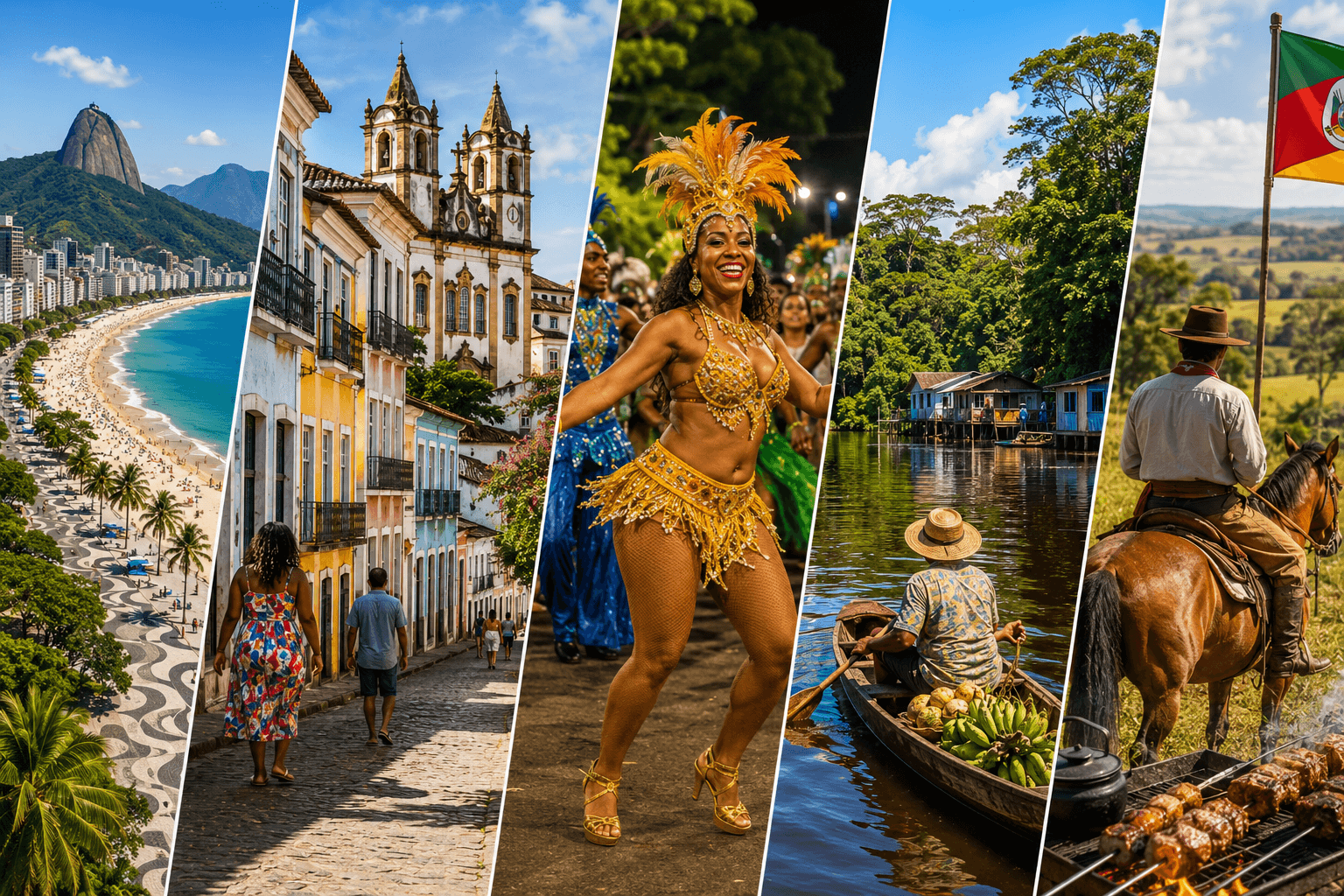
The northern and northeastern zones followed two separate paths shaped by landscape and people. Native ancestry remains the main driver in the massive Amazon basin. Along the northeastern coast, African roots mixed with Portuguese habits to build a lively regional way of life centered in Bahia.
Northeastern communities express their identity through shared celebrations.
- Beliefs like Candomblé guide local festivals and social life.
- Music styles like axé, forró, and frevo define the party season, especially during carnival.
- Local plates feature dendê palm oil, coconut milk, and fresh seafood.
The North offers a different lifestyle shaped by the dense rainforest. Cities like Manaus and Belém keep strong links to the forest, which dictates local routines.
- Native customs shape local stories, natural remedies, and food habits.
- The big yearly Parintins Festival presents an intense theater battle based on forest legends.
- Daily meals rely on cassava, acai berries, and local river fish like pirarucu.
South and Southeast: How Brazilian Culture Differs Across Regions
The southern half of the country contrasts sharply with the hot north, leaning on cities and European roots. The Southeast acts as the financial engine, mixing city speed with old farm traditions. Rio de Janeiro and São Paulo push a rapid pace filled with samba schools and modern art galleries.
Inland areas of São Paulo and Minas Gerais hold onto their caipira lifestyle. This rural way of life features steel-string guitar music and heavy farm food.
Moving south, the scenery shifts toward European styles. German dialects survive in isolated pockets of Santa Catarina where houses look like alpine cabins. The gaucho way of life in Rio Grande do Sul centers on cattle work, leather boots, and sharing hot chimarrão tea.
This local pride remains a defining feature of the south. It clearly demonstrates How Brazilian Culture Differs Across Regions.
Culinary Traditions: How Brazilian Culture Differs Across Regions
Local food provides a direct look at regional identity. While most people view feijoada as the national dish, how people cook it changes by state. In Minas Gerais, simple comfort food rules with warm cheese bread and slow-cooked pork.
The coastal northeast favors hot seafood stews. Southern states focus on slow-roasted meats prepared over open fire pits.
These eating habits show what ingredients grow locally and how ancestors cooked. Following the daily diet reveals How Brazilian Culture Differs Across Regions, moving from northern cassava flour to southern open-pit barbecues.
| Region | Main Influences | Local Customs |
|---|---|---|
| North | Indigenous Amazonian | Festival de Parintins, cassava-based dishes, folklore |
| Northeast | African, Portuguese | Forró music, Candomblé, Capoeira, dendê oil cuisine |
| Central-West | Indigenous, Frontier | Sertanejo music, Pantanal heritage, Tereré tea |
| Southeast | European, Afro-Brazilian, Urban | Samba, Caipira culture, cosmopolitan lifestyle |
| South | German, Italian, Gaucho | Chimarrão tea, Oktoberfest, alpine architecture |
The Central-West Frontier and How Brazilian Culture Differs Across Regions
Huge cattle farms and the wet Pantanal plains shape the Central-West. Sertanejo music, similar to American country music, started here and now fills the national airwaves. Near Paraguay and Bolivia, locals drink tereré, a cold-brewed herbal tea.
Local stories blend native myths with the tales of early explorers who mapped the wild interior.
This farming heartland shows another way How Brazilian Culture Differs Across Regions by focusing on cattle life and frontier tales. Building the city of Brasília in 1960 brought a modern, urban feel to the center. This introduced modern design to a region defined by quiet country life.
Key Takeaways on How Brazilian Culture Differs Across Regions
Knowing these details prevents business mistakes and makes travel far more rewarding. Differences in speech, food, and social habits mean people must adapt to each state. Seeing How Brazilian Culture Differs Across Regions is vital for building real connections with the local population.
Working well in Brazil means respecting local pride. It requires listening to the different voices that make the country whole.
- Change marketing campaigns to fit local tastes instead of using a single national plan.
- Respect regional cooking, since food links directly to family pride and history.
- Learn local speech patterns, including regional slang and accents.


Comments are closed