




 Arts & Culture
Introduction: Best Cultural Experiences Every Visitor Should Try in Brazil
Brazil holds the largest tropical rainforest on Earth, paired with a social fabric spun from native, African, and European roots. For travelers seeking a deep connection with local customs, seeking out the Best Cultural Experiences Every Visitor Should Try in Brazil opens the door to an unforgettable trip. Setting up an itinerary around these real activities makes for a life-changing path that goes far past normal sightseeing.
Sinking into local habits lets you genuinely understand the diverse spirit of the country. This path leads to the core of South American life.
Samba and Carnival: Best Cultural Experiences Every Visitor Should Try in Brazil
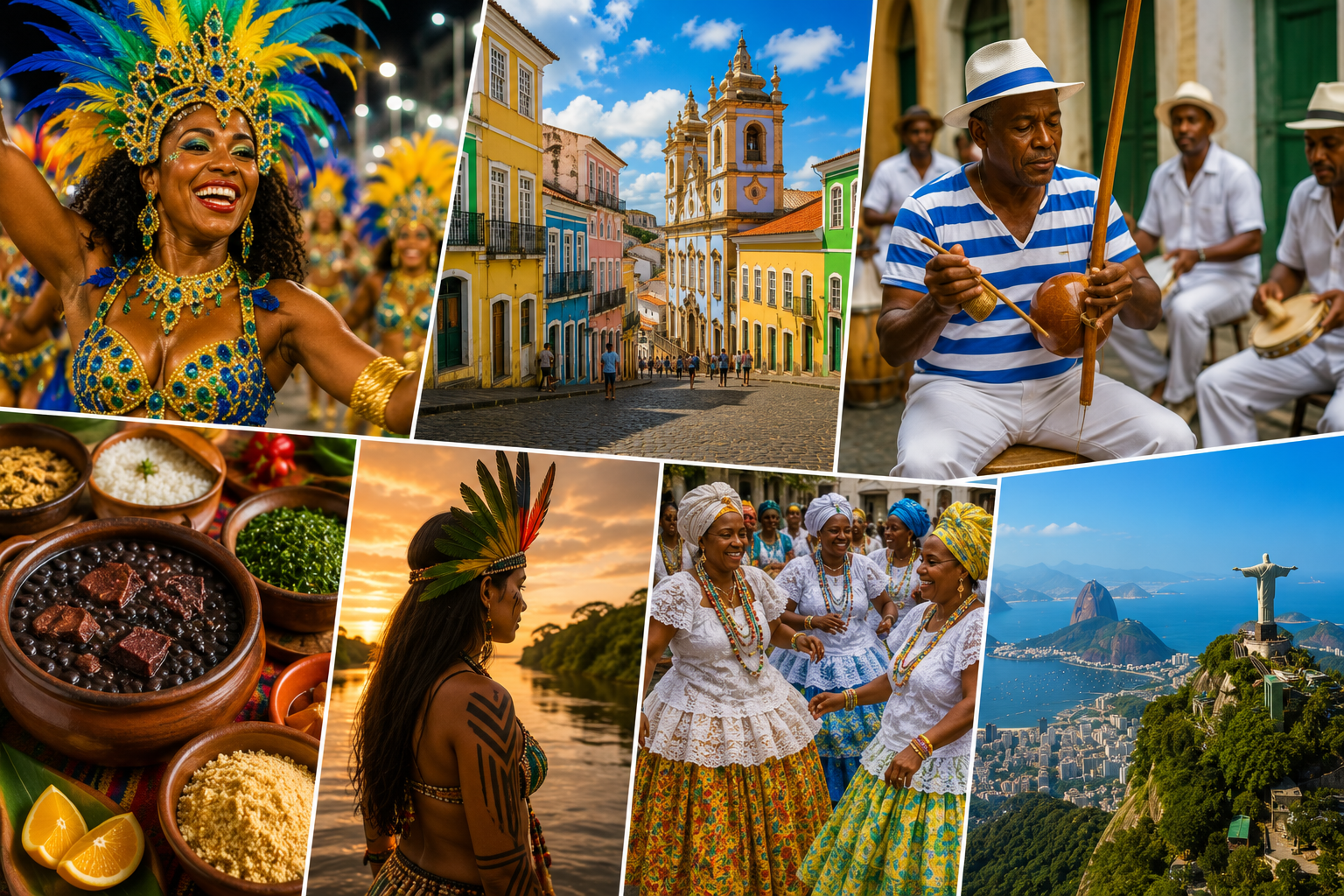
Samba acts as the pulse of the nation, born in the late 1800s within Rio de Janeiro’s Afro-Brazilian neighborhoods. Going to a neighborhood samba school practice during the months before Carnival offers a genuine view of the neighborhood devotion behind the famous parade. These practices are giant public celebrations filled with heavy percussion, swift dancing, and pure happiness.
The energy inside the practice halls of groups like Mangueira or Portela is electric. Foreigners find themselves welcomed warmly by the locals. You can pick up the basic steps from people who have practiced this dance form since childhood.
- Terreirão do Samba in Rio de Janeiro for historic open-air concerts.
- Samba School practices at Mangueira or Salgueiro between September and February.
- Pedra do Sal in Rio de Janeiro on Monday nights for traditional street samba circles.
Gastronomy: Best Cultural Experiences Every Visitor Should Try in Brazil
The food scene reflects a complex history of movement and local adaptation. Feijoada, a thick black bean stew with pork, stands as the national dish, eaten on Saturday afternoons with family. Tasting this slow-cooked food with local ingredients ranks high among the most memorable food customs of the country.
In the northeast state of Bahia, African roots show through dishes like Acarajé. These are deep-fried black-eyed pea patties filled with spicy shrimp paste. Street vendors known as Baianas de Acarajé prepare this dish wearing traditional white lace dresses that mark their spiritual legacy.
This food custom has been officially registered as intangible cultural heritage by Brazil’s Institute of National Historic and Artistic Heritage (IPHAN). It remains a central part of daily coastal life.
- Feijoada served with collard greens, orange slices, and toasted cassava flour.
- Acarajé prepared by the traditional Baianas on the streets of Salvador.
- Pão de Queijo, a gluten-free cheese bread popular in Minas Gerais.
Colonial History: Best Cultural Experiences Every Visitor Should Try in Brazil
Strolling across the cobblestones of Salvador’s Pelourinho district carries travelers back to the 1600s. The baroque churches decorated with gold leaf show off the wealth of the old Portuguese empire. Seeing these old centers provides the historical background that aids any trip to South America.
Ouro Preto, found in the state of Minas Gerais, offers another great example of preserved 18th-century design and soapstone carvings. The city once stood as the center of the gold rush. Its steep, winding streets still hold white-walled homes.
Visiting these towns offers a deep look into the economic forces that made the modern nation. It is a walk through living memory.
Afro-Brazilian Traditions: Best Cultural Experiences Every Visitor Should Try in Brazil
Bahia remains the spiritual center of Afro-Brazilian life. Here, Yoruba religious ideas merged with Roman Catholicism to form Candomblé. Capoeira, a martial art disguised as a dance, was created by enslaved Africans as a tool of survival and defense.
Watching a Capoeira circle, where players gather to the sound of the berimbau, is an unforgettable event. This physical art combines speed, self-defense, and traditional music in a display of bodily skill. The circle promotes unity and honors the legacy of standing up against historical oppression.
Meeting these players offers deep knowledge of how African traditions lasted in South America. Their skills remain highly respected.
- The Afro-Brazilian Museum in Salvador, featuring over one thousand historical objects.
- The historic Pelourinho square, where Capoeira schools perform daily.
- The Quilombo dos Palmares memorial site in Alagoas, representing historic slave defense.
Football Passion: Best Cultural Experiences Every Visitor Should Try in Brazil
Football is a non-religious faith in Brazil, tied to national pride and daily talk. Going to a live match at the Maracanã Stadium in Rio or the Allianz Parque in São Paulo offers great energy. The chanting, colorful banners, and loud celebrations show the collective passion of the local crowd.
The sport arrived in 1894 through Charles Miller. It quickly became a shared space for all social classes. Fans show their loyalty through complex songs that echo throughout the entire stadium.
This event offers a window into the emotional life of the country. It is a must-see for anyone.
Conclusion: Best Cultural Experiences Every Visitor Should Try in Brazil
To fully experience Brazil, travelers must go beyond the clean beaches and meet the living heritage of its people. By choosing real encounters, visitors gain a true appreciation for the diverse identities that shape this lively South American nation.
These moments stay with you long after you leave. They define the true character of the land.
Below is a list of the Best Cultural Experiences Every Visitor Should Try in Brazil to help you plan your travel schedule. This table outlines the Best Cultural Experiences Every Visitor Should Try in Brazil for your upcoming trip.
| Category | Main Highlight | Main Location |
|---|---|---|
| Music & Dance | Samba School Practices | Rio de Janeiro |
| Gastronomy | Feijoada & Acarajé | Bahia & Rio de Janeiro |
| History | Colonial Architecture | Salvador & Ouro Preto |
| Martial Arts | Capoeira Roda | Salvador, Bahia |
| Sports | Live Football Match | Rio de Janeiro & São Paulo |


Comments are closed